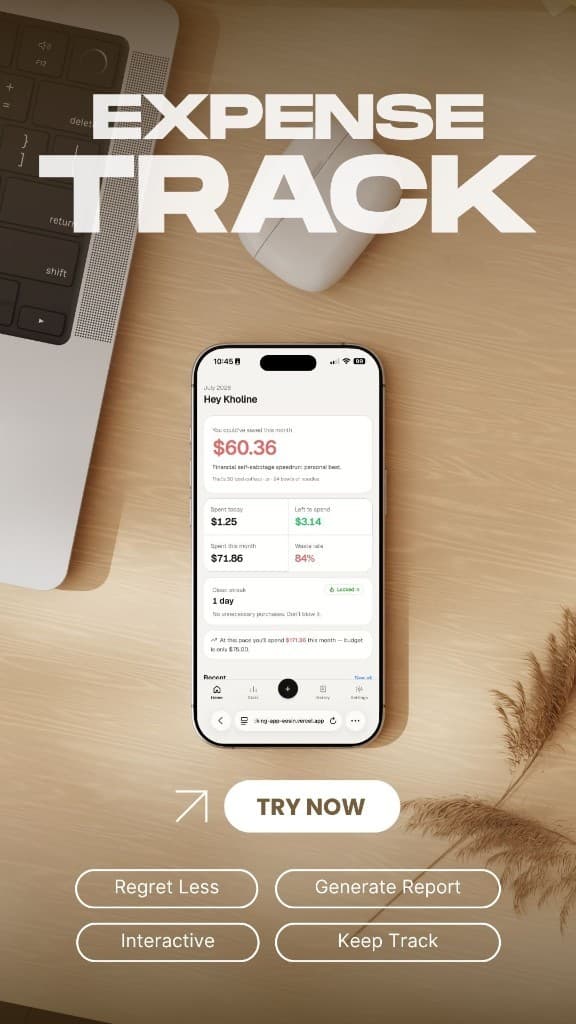
I built Regret Tracker because neutral ledgers were too polite. I wanted every purchase to answer a second question: did I need this? After living with the app for a while, the honest takeaway is simpler than the metrics. It made me more aware of my spending. It did not magically spend less for me.
Awareness is the easy win
Logging amount, category, and that needed-or-regret flag changes how a day feels. Waste rate, “you could’ve saved,” and a broken clean streak are hard to shrug off when they sit on the home screen. I started noticing patterns I used to blur past — dinners that were fine, impulse buys that were not, and the gap between budget and pace.
The numbers are mirrors, not brakes
Stats and history are useful. They show where money went and how often I marked something as regret. But a mirror does not stop the next purchase. When I still tapped “Didn’t need it” and submitted anyway, the app did its job: it recorded the truth. The decision still belonged to me.
Self-control is the product
That is the point I keep coming back to. Regret Tracker is a tool. It surfaces honesty, streaks, and pace warnings so the cost of impulse is visible. The hard part — pausing before the swipe, skipping the random thing, staying inside the budget — is still self-control. Software can coach; it cannot replace the choice.
What I use it for now
I keep logging because awareness compounds. A quiet month of needed spends feels different when the dashboard agrees. A loud regret week is harder to rewrite in my head. If you try the app, treat it the same way: let it show you the pattern, then do the work yourself. The tool helps. You still decide.